Ceiling Water Damage: Signs, Causes and How to Repair It
A brown spot on the ceiling is easy to ignore. It’s small, it’s not dripping and it might have been there for a while. But ceiling water damage often starts this way, and that stain can be the only visible sign of moisture soaking into the drywall, insulation and framing above it.
Roof leaks, plumbing failures, upstairs bathrooms and HVAC systems can all send water into a ceiling. Because the water collects and spreads out of sight, the damage inside the ceiling is often larger than what you see from the room below.
This guide covers the warning signs of a water damaged ceiling, the most common causes, what to do right away, your repair options and when to call for professional help. If you’re dealing with ceiling water damage now, Spotless Cleaners & Restoration provides water damage restoration throughout Johnson City, Kingsport and Bristol.
What Are the Signs of Ceiling Water Damage?
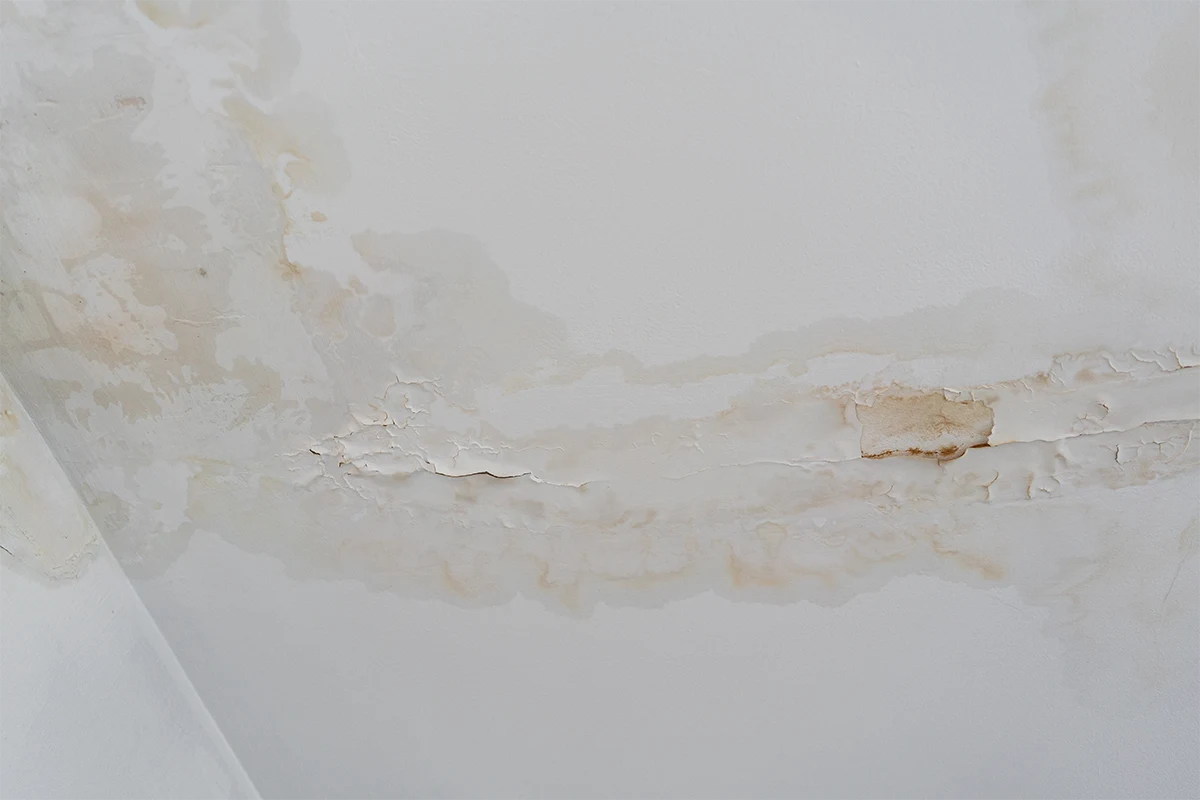
Ceiling water damage looks different depending on where the water came from, how long it’s been there and how much got in. Watch for these warning signs:
- Water stains and discoloration. Yellow, brown or rust-colored spots and rings are the most common sign. They can point to an active leak or one that happened in the past.
- Peeling or bubbling paint. Moisture trapped under the paint or ceiling finish causes it to blister, crack and flake.
- Sagging or bulging ceiling. Drooping drywall or plaster usually means water has pooled above it. This is a collapse hazard, so keep people out from under it.
- Cracks or damaged drywall. Water weakens ceiling materials, causing cracking, swelling or crumbling.
- Active dripping. Water dripping from the ceiling or around light fixtures needs immediate attention.
- Musty odors or visible mold. Persistent moisture creates the conditions for mold growth, including in hidden areas above the ceiling.
A small stain doesn’t always mean small damage. Water travels along joists and pipes before it shows through, so the wet area above the ceiling may be much bigger than the spot you can see. Learn more about the signs of water damage throughout your home.
What Causes Ceiling Water Damage?
Before a ceiling can be dried or repaired, the source of the water has to be found and fixed. Otherwise, the damage will keep coming back. These are the most common culprits.
Roof Leaks
Damaged or missing shingles, worn flashing around chimneys and vents, and failing seals around roof penetrations can all let rainwater into the attic and ceiling cavities. Clogged gutters and poor drainage make it worse by pushing water back under roofing materials, especially during heavy rain. Roof leaks often show up as stains on top-floor ceilings or near exterior walls.
Plumbing Leaks
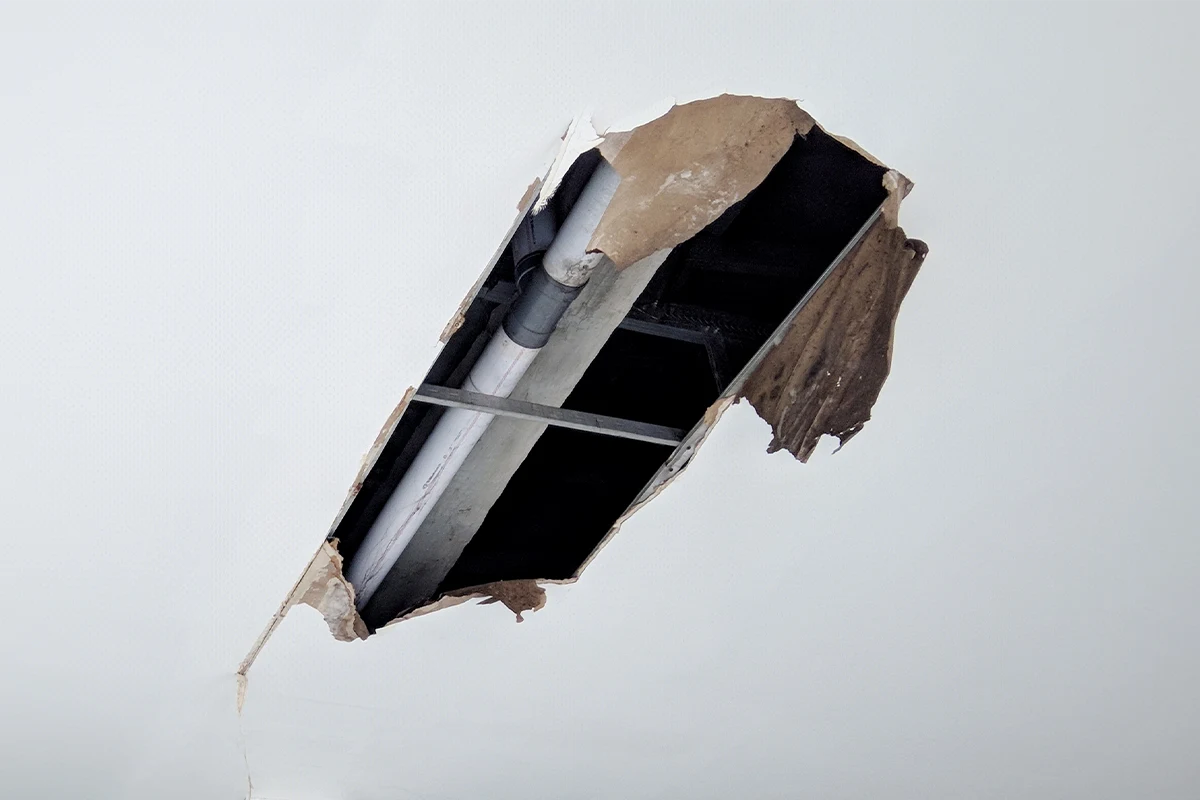
Supply lines, drainpipes and fittings that run above a ceiling can leak slowly over weeks or fail all at once. A slow drip may leave a growing stain, while a burst pipe can soak the ceiling and the room below in minutes. Age, corrosion, loose connections and freezing temperatures all raise the risk.
Upstairs Bathrooms and Appliances
Overflowing tubs and toilets, leaking shower pans and failed caulk or grout can let water seep through the floor into the ceiling below. Washing machines and other water-using appliances on upper floors are another common source when hoses crack, connections loosen or drains back up.
HVAC Condensation
Air conditioning systems produce condensation that drains away through a condensate line and drain pan. When the line clogs or the pan overflows, water collects above the ceiling, often near the air handler or vents. Poor insulation or ventilation can also cause condensation to form on ducts and ceiling surfaces, even when there’s no roof or plumbing leak. Read more about the common causes of water damage in homes.
What Should You Do If Your Ceiling Has Water Damage?
When you spot ceiling water damage, safety and stopping the water come first. Cosmetic repairs can wait. Follow these steps:
- Stay away from unstable ceiling areas. Keep everyone clear of sagging, bulging or visibly weakened sections. A water-logged ceiling can collapse without warning.
- Avoid electrical hazards. Stay away from wet light fixtures, outlets and wiring. If it’s safe to reach the panel, turn off the affected circuit at the breaker. If you’re unsure, call a qualified electrician.
- Stop the water source when safe. For a plumbing leak, shut off the water supply to the fixture or the whole house. For roof or HVAC problems, call the appropriate professional.
- Protect unaffected belongings. If the area is safe, move furniture, electronics and valuables away from the leak. Place buckets or containers under drips only where there’s no collapse or electrical risk.
- Document the damage. Take photos of stains, leaks and damaged belongings. They’ll help with your insurance claim and with planning repairs.
- Arrange a professional water damage assessment. Call for help if the ceiling is unstable, water keeps coming in or you can’t tell how far the moisture has spread.
Don’t puncture a bulging ceiling, pull down soaked drywall or attempt overhead repairs yourself, especially when electrical or structural hazards may be present. If you need help now, Spotless provides emergency water damage assistance around the clock.
Can a Water-Damaged Ceiling Be Repaired?
In many cases, yes. Whether a ceiling can be dried and repaired or needs to be replaced depends on its condition, the material and how much water it absorbed. A stain on the surface is very different from soaked drywall or wet insulation above it.
Either way, two things have to happen before any cosmetic repair: the source of the water must be fixed, and the materials must be confirmed dry.
| Ceiling condition | What it may indicate | Recommended approach |
|---|---|---|
| Minor stains on a dry, intact ceiling | Previous or limited moisture exposure | Confirm the leak is fixed and the materials are dry before considering cosmetic repairs |
| Peeling paint or damaged ceiling finish | Moisture affecting surface materials | Assess moisture and material condition before repairing the finish |
| Swollen, soft or crumbling drywall | Water absorbed into porous materials | Get a professional assessment to decide whether the drywall can be dried or needs replacing |
| Sagging, severely weakened or partially collapsed ceiling | Significant damage and a potential safety hazard | Keep clear of the area and get a qualified professional assessment |
Painting over a water stain might hide it for a while, but it won’t fix an active leak or dry the moisture trapped behind the ceiling.
Why Is Hidden Moisture a Concern After Ceiling Water Damage?
The ceiling surface rarely tells the whole story. Water that reaches a ceiling often spreads into insulation, drywall cavities and wood framing, where you can’t see it. That hidden moisture causes problems long after the stain stops growing.
- Persistent moisture. Insulation, drywall and wood can hold water even when the surface feels dry to the touch.
- Mold growth. Damp materials can support mold. The EPA recommends drying wet building materials within 24 to 48 hours to help prevent mold growth. That’s a guideline for prevention, not a guarantee of how fast materials will dry or when mold will appear.
- Further deterioration. The longer materials stay wet, the more likely finishes fail, drywall breaks down and repairs grow larger.
A professional moisture assessment shows whether more drying or material removal is needed before the job is truly done. Learn what can happen with undetected water damage.
How Does Professional Ceiling Water Damage Restoration Work?
Restoring a water damaged ceiling is mostly about finding and removing moisture you can’t see. Here’s how professionals approach it.
Water Damage Inspection
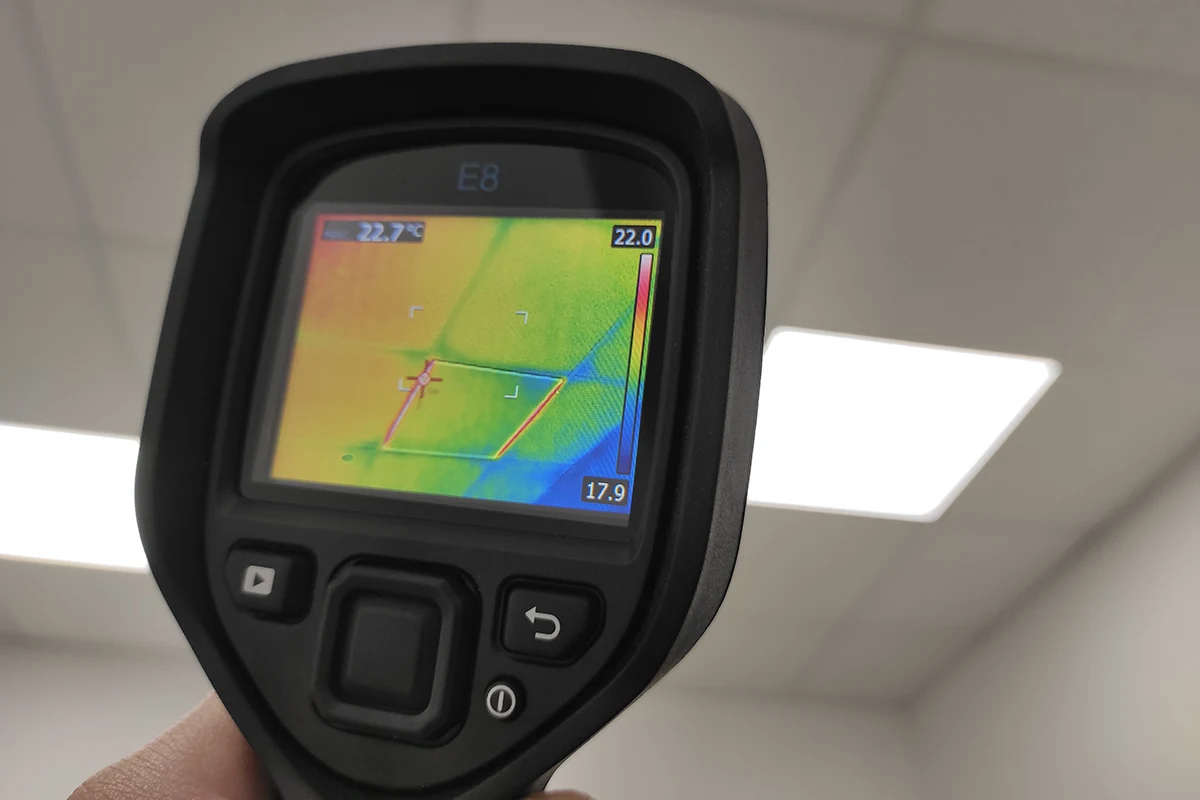
Technicians start by examining the damaged ceiling and the areas around it, including the attic, the floor above and nearby walls, to map how far the water traveled. Infrared imaging cameras spot temperature differences that point to wet areas, and moisture meters confirm the readings so nothing is left to guesswork.
Water Removal
If water is still coming in, it has to be stopped before drying can work. When water has reached the floor, carpet or furniture below, technicians extract it with professional equipment so it doesn’t soak in further or spread to other rooms.
Structural Drying
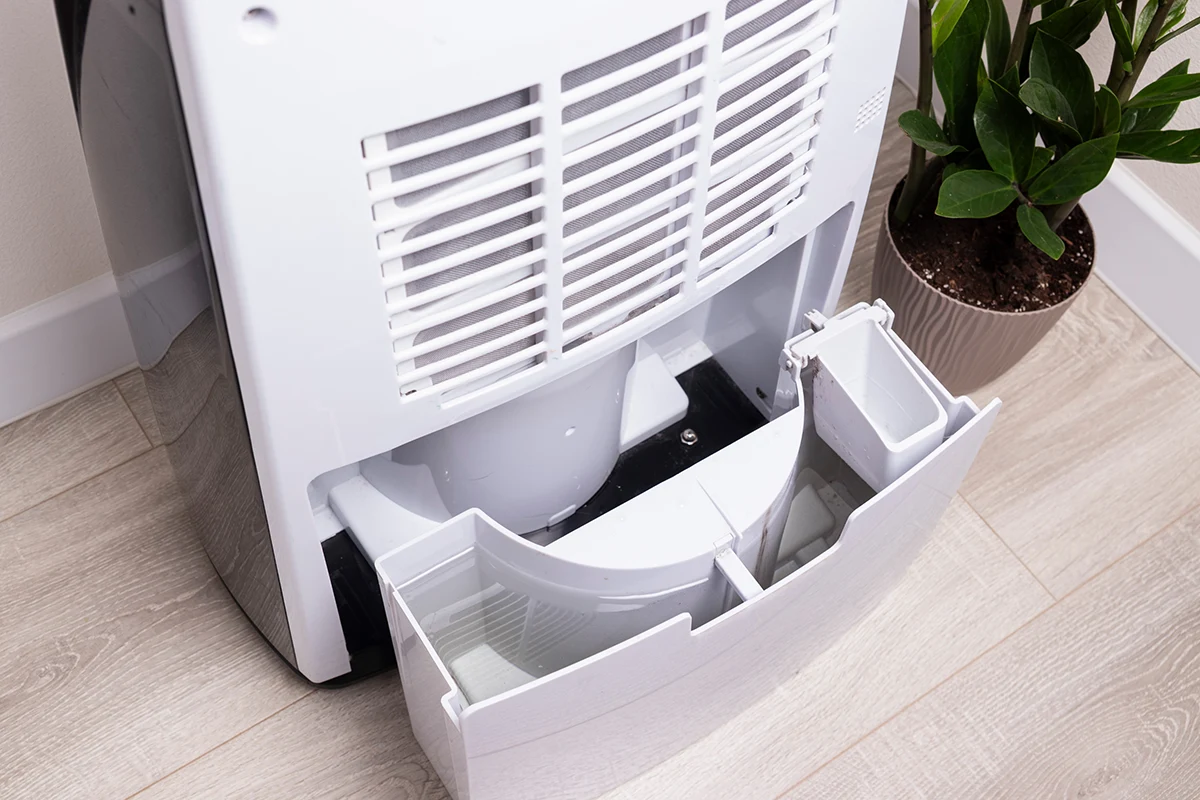
Commercial air movers and dehumidifiers pull moisture out of the drywall, insulation and framing. In some cases, technicians open small, controlled access points to move dry air into the ceiling cavity. Moisture levels are checked daily, and the equipment is adjusted until every material reaches a normal dry reading.
Material Assessment and Repair Planning
Once drying is underway, each material is evaluated. Some drywall can be dried in place. Wet insulation and badly swollen or sagging drywall usually need to be removed and replaced. Ceiling repairs and refinishing should only begin after the moisture problem is fully resolved, and they should be done by qualified professionals.
At Spotless Cleaners & Restoration, every technician holds IICRC water restoration certification, and our team includes two Master Water Restorers. We own and maintain about $1 million in professional drying equipment, including infrared cameras and moisture meters, so we can find hidden moisture and confirm a ceiling is truly dry. Learn more about the water damage restoration process or our professional water damage restoration services.
How Much Does Ceiling Water Damage Repair Cost?
The cost of repairing ceiling water damage depends on how severe the damage is, which materials are affected and how much work it takes to fix. The main factors are:
- Source and extent of damage. An isolated stain from a one-time leak costs far less to address than an ongoing leak that has spread across several rooms.
- Materials that need treatment or replacement. Drywall, insulation, ceiling texture, paint and any other damaged components all affect the scope.
- Drying and restoration needs. Hidden moisture, water extraction and professional drying add to the work required.
- Additional repairs. Fixing the original plumbing, roof or HVAC problem and completing cosmetic repairs may be separate work with separate costs.
Because every situation is different, the best way to understand your actual repair scope is a professional assessment.
How Can You Prevent Ceiling Water Damage?
Routine maintenance and catching leaks early are the best ways to protect your ceilings.
- Inspect roofing and gutters. Check for damaged shingles, worn flashing and clogged gutters, especially before and after storm season.
- Maintain plumbing fixtures. Look over exposed pipes, upstairs bathrooms and appliance connections for drips, corrosion or worn hoses.
- Check HVAC drainage. Keep condensate lines clear and drain pans in good condition with regular HVAC maintenance.
- Address early warning signs. Investigate recurring stains, damp odors or small leaks instead of painting over them.
Find more tips for preventing water damage throughout your home.
Frequently Asked Questions
Does Homeowners Insurance Cover Water-Damaged Ceilings?
Homeowners insurance may cover a water-damaged ceiling when the cause is sudden and accidental, like a burst pipe or appliance failure. Damage from slow, ongoing leaks or poor maintenance is often excluded. Coverage depends on your policy, so check with your insurer.
How Long Does a Wet Ceiling Take to Dry?
Drying time depends on how much water got in, the ceiling materials, humidity and the drying equipment used. Some ceilings dry in a few days; others take longer. The EPA’s 24 to 48 hour guideline is about preventing mold, not a promise everything will be dry by then.
Can Water Stains Return After Repainting?
Yes. Water stains often bleed back through new paint if the leak wasn’t fixed or the materials weren’t fully dry. Fix the source first, confirm the ceiling is dry, then apply a stain-blocking primer before repainting so the stain stays covered for good.
Need Professional Help? We’re Here 24/7
Spotless Cleaners & Restoration has helped homeowners and businesses in Johnson City, Kingsport and Bristol, TN recover from water damage since 1975. Our certified team uses professional drying equipment to find hidden moisture, dry your ceiling properly and get your home back to normal.
If you’re dealing with ceiling water damage, call (423) 926-9251 for 24/7 emergency water damage service, or contact Spotless Restoration online.